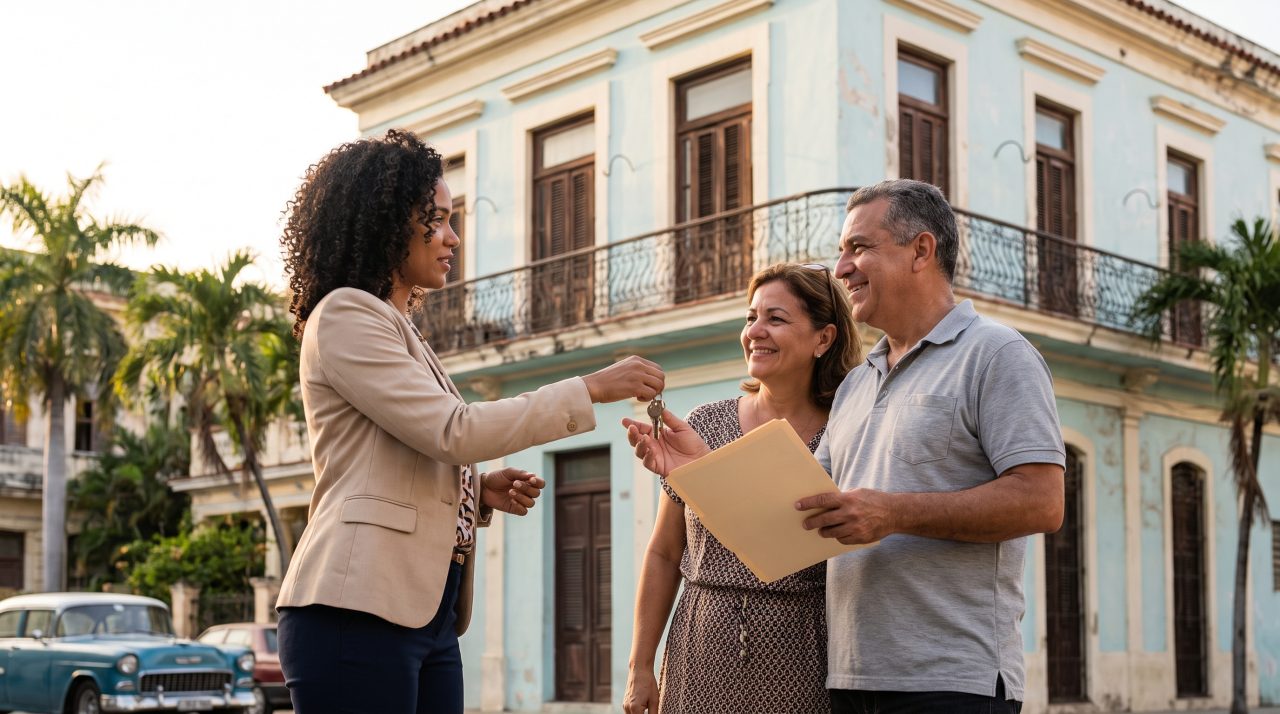
The difference lies in the backing. A broker connects a buyer with a property without a license or legal protection. A manager is a broker who does have a self-employment license. A real estate agent is part of a registered agency, works with contracts, and is accountable to a structure. All three can take you to the same house; however, they do not all respond the same way if something goes wrong.
When buying or selling a property in Cuba, the same question often arises: who am I really dealing with? At first glance, it seems the same. It is not, and the difference becomes apparent when a problem arises.
What is a broker in Cuba?
For years in Cuba, the term broker has been used to refer to someone who connects a buyer with a property, or vice versa. It is the oldest and most widespread term, describing a function rather than a credential: the person who knows what is for sale, who is buying, and puts both parties in contact.
There are brokers with extensive experience, impeccable ethics, and a word that is worth more than a piece of paper. I know and work with several. However, since traditionally anyone could decide to be one —without prior training, without standards to meet, and without anyone to answer to— people without ethics have also entered the sector, causing havoc. This is why for many Cubans, the word "broker" has become synonymous with necessary evil.
In summary: a broker usually operates without a license, legal protection, or formal training. There are always very professional exceptions, but they are just that: exceptions that depend on the individual, not the system.
What is a real estate manager?
A manager is essentially a broker who has a license to practice. The term became popular due to the name of the self-employment work license, and over time, people began to use "manager" to distinguish those who operate formally.
Having a license is a real step towards formality: it means the person is registered, pays taxes, and can be identified. However, it is important not to expect more from the paper than it provides. A license certifies that you can practice; it does not guarantee how you will practice. By itself, it does not ensure the ethics of the transaction or the strict compliance with all legal obligations of a sale.
What is a real estate agent?
A real estate agent is the professional who is part of a real estate agency. This is the fundamental difference: behind them, there is not just one person with a phone, but the combined efforts, knowledge, tools, and contacts of a structured team designed to provide comprehensive service in accordance with the law.
The benefits of working with an agent backed by an agency include:
- Professional structure behind. If your agent falls ill, travels, or leaves the sector, your operation does not become orphaned: there is a team that continues it.
- Legal and transparent contracts. Every step is documented, with conditions that both parties read and sign before any money changes hands.
- Real security and guarantees for both parties. Not just for the buyer: also for the seller.
- Continuous training. Legislation, appraisal, negotiation, and procedures change; a team stays updated, while an individual rarely has time to do so.
- A collective reputation to defend. This is the most underestimated point: the agent risks not only their name but the name of the entire agency. Their success depends on client satisfaction, as an unhappy client costs the whole team.
Which of the three is right for you?
It depends on how much risk you are willing to take and how valuable the transaction is. A property sale or purchase is often the largest transaction in a Cuban family's life, and the right question is not "who charges less?" but "who is accountable if this gets complicated?".
- Broker: may work well if you know them well and someone trustworthy vouches for them. The backing is personal, not institutional.
- Manager: provides traceability. They are identified and registered, which already marks a difference compared to those who operate in the shadows.
- Real estate agent: provides institutional backing, contracts, and continuity. It is the option with the most guarantees when a lot is at stake.
How to know who you are dealing with
You don't need to be a specialist to clear your doubts. Four questions are enough, and all four should be asked before handing over a single peso:
- Do they have a license and can they show it? A formal professional will not be uncomfortable with this question; they will answer it immediately.
- Which agency do they belong to? If they claim to belong to one, verify it externally: look up the agency, check their public profile, and confirm that they appear on their team.
- What is signed and when? Ask to see the contract template before committing. If there is no contract to show, you already have your answer.
- Who is accountable if something goes wrong? They should provide the specific name of the person or entity. "Trust me" is not an answer.
At Casas Oasis, you can view the directory of real estate agencies and the directory of agents, with their active listings and work areas, and verify the verified professional seal before calling anyone.
What really changes
The term used by the person assisting you matters less than what is behind it. An honest broker can provide better service than a careless agent. But when the deal goes awry —and in a sale, it goes awry more often than one might think— the difference between the three stops being a nuance of vocabulary: it becomes the difference between having someone accountable and having no one.
Ask, verify, and request that it be put in writing. A serious professional will appreciate it, as it is precisely what distinguishes them.
Frequently asked questions
What is the difference between a broker and a real estate agent in Cuba?
The broker connects buyer and property on their own, usually without a license or contract. The real estate agent is part of a registered agency: works with contracts, is accountable to a structure, and their agency is responsible for them.
What is a real estate manager?
It is a broker who has a self-employment work license to practice the activity. The license certifies that they can practice and makes them identifiable, but by itself does not guarantee the ethics of the transaction or compliance with all legal obligations of a sale.
Is it illegal to work with a broker in Cuba?
The article does not address the legal qualification of each case. What changes according to whom you deal with is your backing: a broker without a license or contract does not leave written evidence of what was agreed, so if the operation gets complicated, there is no one to claim against.
How do I verify that an agent truly belongs to a real estate agency?
Don't just ask them: verify externally. At Casas Oasis, you can open the public profile of the agency and check if the agent appears on their team, along with the verified professional seal.
Which one is right for me if I am going to sell my house?
It depends on how much is at stake and how much risk you are willing to accept. The useful question is not who charges less, but who is accountable if the operation gets complicated: the broker offers personal backing, the manager adds traceability, and the agency agent adds contracts and continuity.