From 21 October 2026, the sale of a home in Cuba is governed by Law 187 “Housing Law”, published in Official Gazette (Ordinary) No. 86 on 14 October, and by its General Regulation, Decree 176. Law 65 of 1988 and Decree-Law 288 of 2011 are repealed.
The deal still ends where it always has, before a notary. What changes is who can buy, how you pay, what the tax is calculated on and what the seller must have sorted out. Here is the route, in order. What the law changes in general, and for Cubans abroad in particular, is in Cuba’s Housing Law 187: what changes from 21 October.
1. Who can buy
- Cuban citizens, wherever they live. The law calls natural persons “Cuban citizens and foreigners with permanent residence” (art. 3), without requiring domicile in Cuba.
- With a limit: two homes, plus a holiday home already declared as such in the title (art. 4.1). Anyone shown to exceed it loses “the acquired home, which shall be the last one” (art. 4.2). Count yours before you sign.
- Foreigners. A permanent resident buys like a Cuban. For everyone else, article 89.1 opens sales between persons “Cuban or foreign”, and 89.3 gives them the rights and obligations of the law. What it does not clarify is whether the two-home limit applies to them: confirm with the notary.
- Companies. Non-State entities, mipymes included, can only acquire up to two homes (art. 91.3), and buying from an individual for anything other than housing their workers needs the approval of the Minister of Construction, after a file of about 30 working days between the provincial Housing Directorate and the Ministry (Decree 176, art. 228).
2. The seller gets the paperwork in order
The law requires the seller to meet three conditions before signing (art. 90.2):
- Owe nothing on the price of the home. If it came from a State allocation paid in instalments, they must be settled and proven with the relevant document.
- Have paid the tax.
- Have the home registered in the Central Registry of Real Property.
Neither the law nor Decree 176 gives a closed list of documents for a sale between individuals. But depending on the case, you will be asked for, or will want to have, other pieces:
- A title that reflects any building work. The law requires “construction changes” to be registered (art. 140). If you added a room, a mezzanine (barbacoa) or a floor and it is not recorded, the title does not describe what you are selling. It is updated with the technical report on description, valuation, measurements and boundaries (Decree 176, art. 66.2), which the municipal Territorial and Urban Planning office issues in about 20 working days (art. 87).
- The cadastral certificate. It proves the cadastral value, which is now the floor for tax. It is valid for five years from issue (Decree 176, art. 18.4) and only the owner can request it. How, in Cadastral certificate and cadastral value in Cuba.
- If the home was subsidised or allocated at a subsidised price and 15 years have not passed since the first allocation: the subsidy must be repaid, and the notary requires it before signing (Law, arts. 53 and 56; Decree 176, art. 93). If it was allocated to a family without means or with three or more minors, the State has a right of first refusal: the home must be offered to it and the notary shown the decision not to exercise it (Law, arts. 54-55; Decree 176, art. 94). These burdens appear in the title (art. 57.1).
- If it is in a zone with special regulations —Old Havana and Centro Habana under the City Historian’s Office, zones of high significance for tourism, the Mariel Special Development Zone, among others—, the sale needs an authorising decision, with prior opinion from the zone authority (Law, art. 168 c; Decree 176, arts. 272 and 276-279). Allow 5 working days to request the opinion, 15 for the zone to answer (silence counts as approval) and another 15 for the decision.
- If it is an apartment in a building: debts with the building’s Administration Board pass to the buyer if the seller does not pay them (Decree 177, art. 6.3). Details in Buying or selling an apartment in a building in Cuba.
3. The buyer does their checks
- Who lives in the house. Selling “to the detriment of the protection that article 66.1 grants co-residents” is a ground for nullity (art. 59). That article protects, among others, ascendants and descendants, the spouse or registered partner and vulnerable older adults, provided they have no other home or means to get one. If one of them lives there with nowhere to go, the sale is at risk.
- Whether it is the family home. The owner can register it as such (art. 61.1), and selling it must take into account “the family interest most in need of protection” (art. 62.1).
- That title and reality match: square metres, floors and building work. Whatever is not in the title, you are not buying with papers.
- Your own home limit (art. 4).
4. Price and tax
The price is free: “the price agreed between the parties” (art. 89.1), and any clauses can be agreed as long as they are not against the law and do not distort the contract (art. 89.2).
What changes is the tax base. The law does not touch the rates, which remain in Law 113 on the Tax System, but it rewrites its article 44: in a sale, the base is the transfer price “provided it is equal to or higher than the cadastral value” (Fourth Final Provision). If the declared price is lower, the cadastral value applies (art. 144). Putting a price below the cadastral value in the deed saves no tax; putting one below the real price also leaves the buyer with no proof of what they paid.
The reference value of Resolution 313/2024 is no longer the benchmark: the cadastral value certified by the municipal INOTU office is. The seller must reach the notary with “the payment of the tax” done (art. 90.2 b). To work out figures, use our tax calculator.
5. Payment: no cash
The price is paid “through the instruments or credit titles provided for in banking legislation or any other means of payment other than cash” (art. 90.1). The law sets no threshold or minimum: no payment of the price can be made in cash, whether it is 20,000 or 2 million pesos.
Two practical tips that are not law but save trouble: use a means of payment that leaves a trail in the names of buyer and seller, and make sure the amount paid matches the price in the deed.
6. Signing before the notary, and registration
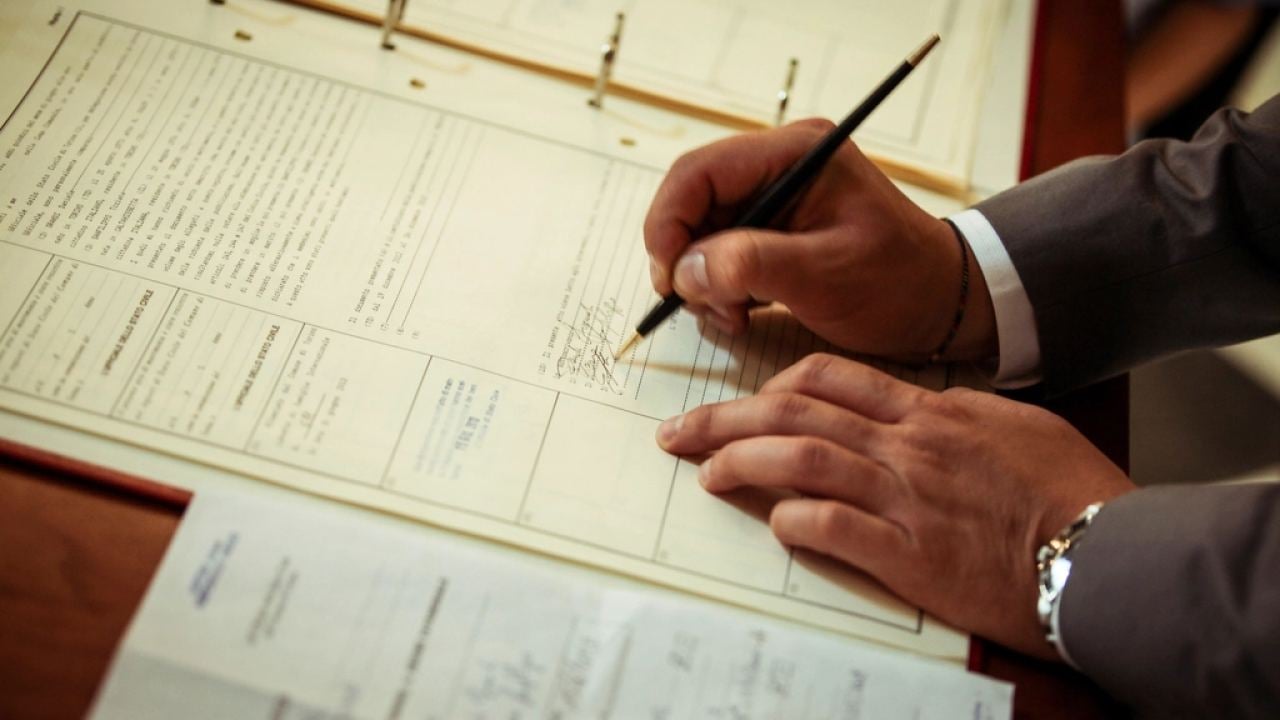
- The public deed is signed before a notary “based in the province where the home is located” (art. 89.1).
- Then the transfer is registered in the Central Registry of Real Property: the law requires the title and “transfers of ownership” to be registered (art. 140). Without registration, the next person who wants to sell that house —you— will not meet the requirement of art. 90.2 c.
The law sets no deadline for the deed. What takes time is what comes before: a technical report, about 20 working days; authorisation in a special zone, about 35; ministerial approval if a company is buying, about 30.
Special cases
Buying a house under construction
It is now possible: “the rights over homes under construction” are bought by deed before a notary (Law, art. 92.1). You must present title to the land or rooftop, the approved construction project, the building licence and a survey of the works or a certificate that they are under way; afterwards, the buyer transfers the licence at the Territorial Planning office (Decree 176, arts. 127.1 and 129).
A “holiday” beach house
Holiday-home status “is lost when it is transferred by any act of ownership inter vivos” (art. 138.4). Whoever buys it receives it as an ordinary home, and it counts towards their limit of two.
State premises converted into homes
When the State hands over premises for the beneficiary to convert into a home through their own work, the decision carries “the prohibition on disposing of the property, except on succession mortis causa” (Decree 176, art. 114 c). They cannot be sold.
If you live outside Cuba
You are a natural person (art. 3) and can buy or sell. The law does not say how to sign from abroad; in practice you sign in person or through an attorney-in-fact with a notarial power of attorney. Before granting the power, ask the Cuban notary what form it needs. And remember: payment cannot be in cash.
What started before 21 October
Matters being processed “at any Housing office or court” continue under the rules they started with (Second Transitional Provision). The law does not mention notaries, so it does not say what happens to a sale requested at a notary’s office and not yet signed on that day. Ask the notary which requirements and which tax base they will apply before paying anything.
Checklist
| What you need | Rule |
|---|---|
| Seller: home price settled and proven | Law 187, art. 90.2 a |
| Seller: tax paid | Law 187, art. 90.2 b |
| Seller: home registered, with building work up to date | Law 187, arts. 90.2 c and 140 |
| Seller: valid cadastral certificate (5 years) | Decree 176, art. 18.4 |
| Seller: subsidy repaid or first-refusal waiver, if applicable | Decree 176, arts. 93-94 |
| Seller: authorisation if in a special zone | Decree 176, arts. 272 and 276-279 |
| Seller: building fees up to date, if an apartment | Decree 177, arts. 6.3 and 47 |
| Buyer: not exceeding two homes | Law 187, art. 4 |
| Buyer: check protected co-residents | Law 187, arts. 59 and 66.1 |
| Both: payment through a bank or other non-cash means | Law 187, art. 90.1 |
| Both: deed before a notary in the province | Law 187, art. 89.1 |
About this article. Written on 14 October 2026 on the text of Law 187 and Decrees 176 and 177 published in Official Gazette (Ordinary) No. 86. Where the rules say nothing, we point it out; each notary’s practice may ask for more papers than those cited here.
Frequently asked questions
What must the seller have before going to the notary?
Law 187 requires three things beforehand (art. 90.2): any debt for the price of the home settled and proven with the relevant document; the tax paid; and proof that the home is registered in the Central Registry of Real Property. If the home was subsidised, the notary also requires the subsidy to be repaid (Decree 176, art. 93).
Can you pay for a house in cash in Cuba?
No. From 21 October 2026 the price is paid “through the instruments or credit titles provided for in banking legislation or any other means of payment other than cash” (Law 187, art. 90.1). The law sets no threshold: it applies to any amount.
If I put a lower price in the deed, do I pay less tax?
Not below the cadastral value. The tax base in a sale is the price “provided it is equal to or higher than the cadastral value” (Law 113, art. 44, as worded by the Fourth Final Provision of Law 187). If the declared price is lower, the cadastral value applies (art. 144).
How many homes can I buy?
An individual can own up to two homes, plus a holiday home already declared as such in the title (art. 4.1). Anyone exceeding it loses the most recently acquired one (art. 4.2). Non-State companies, such as mipymes, can only acquire up to two (art. 91.3).
Can I sell a house with my mother living in it?
Carefully. Selling to the detriment of the protection the law gives certain co-residents is a ground for nullity (art. 59): ascendants, descendants, the spouse, vulnerable older adults and others in art. 66.1, provided they have no other home or means to get one. Sort it out before signing.
I live outside Cuba. Can I buy or sell?
A Cuban citizen is a natural person even when living abroad (art. 3), so yes. The law does not regulate how to sign from abroad: in practice you sign in person or through an attorney-in-fact with a notarial power of attorney. Ask the notary which power they accept before granting it.
I booked the notary before 21 October. Which law applies to me?
The law says matters being processed “at any Housing office or court” continue under the previous rules (Second Transitional Provision), but it does not mention notaries. Ask your notary which requirements and which tax base they will apply.