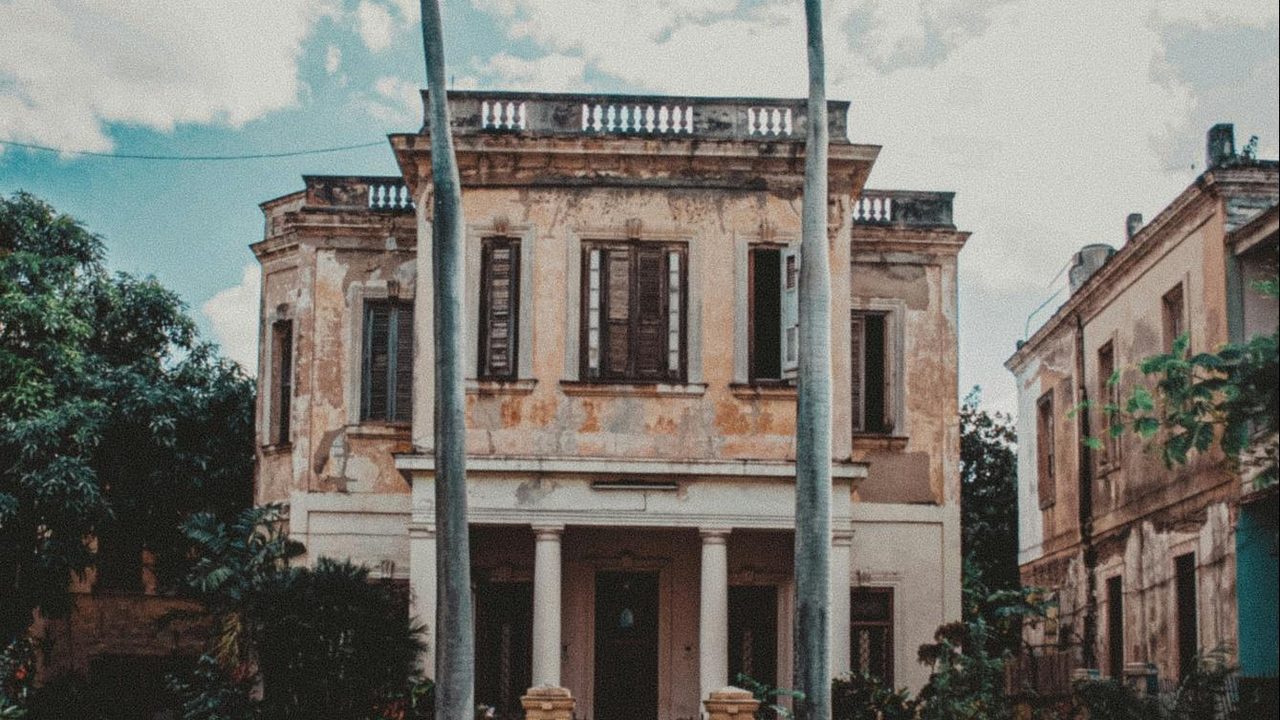
Cuban residential architecture does not adhere to a single style. It varies between cities, neighborhoods, and periods: on the same street, one can find a colonial house, an eclectic facade from the republican era, and a modern building. Understanding these layers helps to comprehend the heritage, but appearance alone never replaces a historical or technical study of the property.
History and Evolution of Cuban Architecture
The cities founded during Spanish colonization incorporated layouts, techniques, and domestic types from Europe, later adapted to local conditions. The UNESCO description of Old Havana identifies baroque and neoclassical monuments alongside houses with arcades, balconies, iron grilles, and interior courtyards.
The repertoire expanded over time. UNESCO documents in the historic center of Camagüey neoclassical, eclectic, Art Deco, neocolonial, Art Nouveau, and rationalist influences. This sequence allows for a discussion of a diverse history, rather than a rigid classification applicable to all of Cuba.
During the republican era, eclectic compositions multiplied, and Art Nouveau and Art Deco works emerged. Later, neocolonial styles reinterpreted historical elements, while rationalism and the modern movement emphasized function, structure, and the relationship between interior and exterior.

How to Recognize Styles: Clues, Not Absolute Labels
A colonial house may be organized around a courtyard and feature galleries or arcades. Baroque expressions often seek movement and ornamental richness; neoclassical styles favor more symmetrical compositions and references to classical orders. In both cases, later renovations may have mixed elements from other periods.
Eclecticism combines historical repertoires within a single work. Art Nouveau is associated with organic lines and decoration inspired by natural forms, while Art Deco favors geometries, stepped rhythms, and stylized ornamentation. Neocolonial styles recover motifs from Hispanic tradition; rationalism and other modern movements tend to simplify ornamentation and clearly express function and volumes.
These signals help in observation but do not certify a date or authorship. To document a specific property, archives, plans when available, and professional judgment are necessary.
Climate-Related Features and Daily Life
Many historic houses feature courtyards, portals or arcades, balconies, high ceilings, shutters, and opposing openings that promote shade and cross ventilation. These are common responses to the warm climate, not universal requirements for a “Cuban house.” The final form also depends on the plot, neighborhood density, available resources, and accumulated transformations.
Grilles and balconies add security, connection to the street, and craftsmanship. Courtyards can organize circulation and bring light indoors. Their value is not just decorative: they are part of how the home is inhabited and adapted.
Materials, Diagnosis, and Restoration
The wall construction, wood, tiles, and reinforced concrete appear in different proportions depending on the date, location, and renovations. It is unwise to deduce the construction system from a photograph. Before intervening, a structural diagnosis is needed, and when appropriate, a heritage assessment to identify moisture, corrosion, settlement, loss of section, and incompatible repairs.

A responsible restoration defines priorities after diagnosis and employs solutions compatible with the building. The intervention may require permits and coordination with heritage authorities. The UNESCO Transcultura program offers a recent example of training and specialized work in the restoration of the Convent of Santa Clara in the historic center of Havana.

Houses for Sale in Cuba: Current Real Estate Market Overview
Speaking of a single “Cuban market” obscures important differences. The published offers vary between provinces, municipalities, and neighborhoods, as well as by type of housing, its construction condition, and the currency declared by the advertiser. The published inventory is a changing snapshot, not an appraisal. Therefore, the number of listings and their starting prices serve to explore options at a specific time but do not alone prove the final price of a sale or a national trend.
On Casas Oasis, one can consult the currently listed properties and a summary of the Cuban real estate market. When interpreting this data, it is advisable to check when each property was published or updated, what area and condition it declares, if the price is expressed in the same currency, and if there are enough comparable listings in the area. A median calculated with scarce or very heterogeneous inventory should be read with special caution.
Architecture can influence interest in a property, but a recognizable style does not determine its value. Two houses that appear similar may require very different investments due to issues with roofing, moisture, installations, structure, or carpentry. They may also differ in ownership, encumbrances, occupancy, accessibility, and legal possibilities for renovations. Before comparing prices, one must compare equivalent conditions and separate visual appeal from technical diagnosis.
Listings are a starting point for research, not a certification. The information and photographs provided by an advertiser should be contrasted with documents, visits, and professional inspections. A greater number of listings does not guarantee liquidity: the timing and conditions of a transaction depend on the parties, documentation, and economic context.
Houses for Sale in Havana: Opportunities and Challenges
Havana encompasses very different neighborhoods and urban fabrics. Old Havana concentrates a historic ensemble of exceptional value; other areas combine eclectic, Art Deco, neocolonial, modern, and later constructions. This diversity allows for the search for a house that meets residential use, proximity to services, or interest in preserving a property, but it does not automatically turn an old property into a financial opportunity.
The UNESCO describes Old Havana as a complex formed over several centuries and warns about deterioration, chronic abandonment, severe weather events, and the need to maintain conservation programs. These conditions do not affect the entire city or every building equally, but they explain why a serious evaluation must review structure, roofing, moisture, corrosion, technical networks, and previous modifications. A well-preserved facade does not demonstrate that the rest of the property is in good condition.
In protected sectors or buildings with heritage values, a repair may be subject to additional criteria and permits. Responsible conservation does not consist of indiscriminately replacing materials: it starts with a diagnosis, identifies valuable elements, and defines compatible interventions. The cost, timeline, and feasibility of the works must be studied before assuming commitments.
To explore the offerings, one can review the houses listed in Havana and the price indicators by area. Both resources describe available listings and should be read with their date and methodology in mind. Location, access, legal and construction status, household needs, and the complete budget matter more than a generic label of “expensive” or “cheap” neighborhood.
Affordable Houses for Sale in Havana: How to Compare Without False Promises
Sorting listings by price helps narrow down a search, but “affordable” is a comparison within the available inventory, not a guarantee of a good deal. A property listed at a lower price does not necessarily cost less in the end. Structural repairs, waterproofing, installations, paperwork, taxes, material transport, and construction time can substantially change the total budget.
Before evaluating an option, it is advisable to separately record the listed price, applicable legal and tax expenses, a reserve for repairs estimated by professionals, and foreseeable recurring costs. Universal figures should not be invented: each building and transaction requires its own documents and budgets. If essential data is missing, it is responsible to keep them as uncertainties, not to replace them with unsupported averages.
A visit should check ventilation, water entry, cracks, deformations, roof condition, and networks, without limiting to what is visible. Risk signals require technical evaluation. Meanwhile, the legal review should confirm the identity of the parties, ownership, property description, possible encumbrances, and necessary documentation. A construction inspection does not replace legal verification, nor vice versa.
The urgency of a listing does not demonstrate that there is an unrepeatable opportunity. Comparing several similar properties, keeping evidence of the information received, and obtaining independent advice reduces decisions based solely on photographs or commercial pressure. Casas Oasis shows inventory and facilitates contact; it does not appraise the property, certify its conditions, or promise purchase results.
What to Check Before Buying a House in Cuba
The cultural value of a property does not equate to a financial promise. The price and its evolution depend on location, construction condition, legal situation, conservation costs, and economic conditions. Those comparing options can consult the houses for sale, the houses in Havana, the Cuban real estate market overview, and the prices by area in Havana, always checking the date and methodology of the data.
Before signing, ownership, encumbrances, registration description, identity and capacity of the parties, and required documentation must be verified. The sale of houses between individuals was expanded by Decree-Law 288 of 2011; the Library of Congress summarizes this regulatory change. Notarial formalization and registration require advice tailored to the specific case.
Under the general regime, Cubans residing in the country and foreigners with permanent residency have been able to purchase housing. A non-resident should not assume that their migratory status grants them that right. The new immigration laws published in May 2026 established an entry into force 180 days after publication; they do not automatically convert a migratory condition into a property right. The explanation of these immigration regulations should be read alongside housing regulations and the advice of a qualified professional.
For a more comprehensive explanation of the process, consult the guide to buying houses in Cuba. Before acting, confirm that its information remains current for your personal situation.
Conclusion: Cultural, Residential, and Investment Value
Cuban houses allow for the reading of centuries of adaptation between architecture, climate, and daily life. Knowing their courtyards, portals, balconies, techniques, and transformations helps to appreciate this heritage and propose better-informed conservation. It also reminds us that each building has its own material history that cannot be diagnosed solely by its style or apparent age.
A house can have cultural, residential, or familial value without being a profitable investment. Buying to inhabit, conserve, or pass on to family responds to different objectives than buying with expectations of rental income or resale. These are different goals, and their financial outcomes are uncertain.
When there is a financial objective, the decision must incorporate prudent scenarios: documentation and right to purchase, technical condition, complete budget, repair time, verifiable demand, and capacity to handle unforeseen events. There is no certainty of appreciation, income, liquidity, or recovery of rehabilitation costs. The listed prices do not equate to closing prices, and past behavior in an area does not predict the future.
The best understanding of a property combines three perspectives: its architectural significance, its real capacity for the intended use, and the available legal and technical evidence. Exploring listings can initiate that research; closing it requires independent checks and professional advice appropriate to the case.
Consulted Sources
- UNESCO: Old Havana and its Fortification System.
- UNESCO: Historic Center of Camagüey.
- UNESCO: Restoration of the Convent of Santa Clara.
- Library of Congress: Reform of the General Housing Law of 2011.
- Granma: Notarial formalization of housing sales.
- Granma: Taxes in housing sales.
- Granma: New Immigration, Foreigners, and Citizenship Laws, May 2026.
Frequently asked questions
What architectural styles can be found in Cuban houses?
In Cuba, architecture of colonial origin coexists with baroque, neoclassical, eclectic, Art Nouveau, Art Deco, neocolonial, and modern expressions. Their presence varies by city, neighborhood, and construction date.
What traditional features help recognize a historic Cuban house?
Many historic ensembles feature interior courtyards, arcades, balconies, iron grilles, and wooden carpentry. These are common traits, not universal requirements.
What should be reviewed before restoring an old house?
First, a professional structural and heritage diagnosis is needed. Then, compatible techniques, materials, permits, and intervention priorities for that property are defined.
Can a foreigner buy a house in Cuba?
Not all foreigners can buy an ordinary property. The general regime has allowed sales to foreigners with permanent residency; non-residents may be subject to specific regimes. Current rules should be confirmed with a notary or qualified professional.
Does buying a house in Havana guarantee appreciation?
No. No property guarantees an increase in value. The outcome depends on location, construction condition, legal situation, conservation costs, and economic conditions.